Price Match Guarantee
We won't be beaten on price, and can't be beat on advice.

Secure Payment Options
Make your purchases in complete confidence.

Customer Support
Need Assistance?
Call our Hydroponics experts.


Please Call Our Team.
To enquire about Free Delivery.

All products are delivered in plain packaging for your convenience
We won't be beaten on price, and can't be beat on advice.



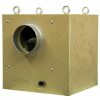
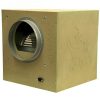
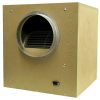
Price range: £235.00 through £370.00
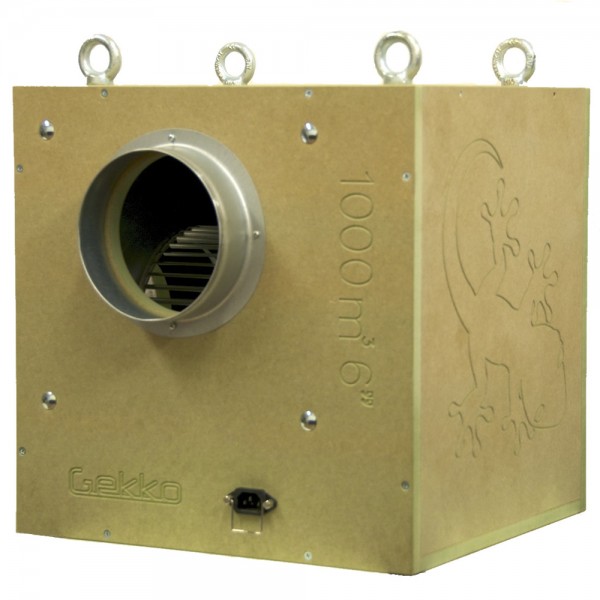
These silent acoustic wooden box fans are precision engineered and assembled right here in the UK. This gives them a distinct advantage over cheaply manufactured, inferior imported versions that may well look similar, but don’t cut the mustard when it comes to adequately ventilating a hydroponic grow room.
Further to simply moving an incredible amount of air, acoustic box fans make sure they do it with as little noise as possible, a common demand from most indoor growers. Maintaining an indoor hydroponic grow room in an urban environment means that sometimes extra attention may be needed in noise pollution, to avoid unwanted disputes with otherwise friendly neighbours. Acoustic box fans deliver the ultimate in quiet extraction systems, to make sure this sort of situation does not land on your door step.
Gekko acoustic box fans are precision built, purpose designed box fans for the modern gardener. Ideal for use as an intake or extract fan, this custom designed fan provides all the answers to creating the perfect environment within your indoor garden.
The high quality Torin Sifan motorthat is used in the Gekko acoustic box fan is one that barely needs any introduction. Seen as the industry standard in motors of this type, quite simply there is no single finer piece of equipment that could grace the innards of the Gekko. As well as offering a substantial output in terms of air movement, it operates at an extremely quiet level and over the years has proven itself as the ultimate work horse for box fan motors.
The MDF panels that form the casing of the acoustic box fan itself are moisture resistant, a highly important aspect to consider when using inside a humid grow room. It doesn’t take much thought to realise that a metal object situated in a wet and humid grow room environment, will not see the usual lifespan it may be accustom to. Sealing these components off from the excess humidity not only prolongs the lifespan of the equipment, but also ensures they run at maximum capacity, for as long as possible.
The flange spigots have been carefully considered and designed to make sure that something as simple as attaching the ducting, does not become an infuriating and tedious task. combi duct or acoustic ducting is easily attached to the spigots, designed with a roll top so as well as sliding on easily, they form a tight and solid natural seal with the duct run.
If you have any questions about our products, feel free to call us now or send us an online enquiry and we’ll get back to you promptly.
Enquire Now Call 0161 688 7333The Gekko Acoustic Box Fan should be mounted in a suitable place using the four eye screw fixings supplied with the unit which are fitted into each corner of the top surface. Rope Ratchets are a great way to hang the Gekko fan so that its height can be adjusted if needs be. Alternatively, the fan can be mounted on a flat surface. Ideally, acoustic ducting should be used with this product to maintain sound at minimum levels. Acoustic fans can only do so much to reduce sound. As air travels through ducting, added noise is generated as it moves over ridges and bends, creating friction.
Ducting should be attached to the vents on the Gekko fan with duct clips (supplied separately) to ensure that the join is secure. If ducting comes loose and the extraction system is compromised, unwanted smells may escape, and heat and humidity levels may rise. For the same reason, it’s advisable to connect the inlet vent of the fan to the carbon filter using a fast clamp (also available separately).
The Gekko Acoustic Box Fan is supplied with an IEC Connector, so that it can easily be connected to a power supply with a standard kettle lead. The Gekko Acoustic Box Fan has a clamp which closes over the IEC connection, ensuring that the cable cannot be accidentally pulled out. The supplied IEC cable is around 165cm long; locating the Gekko fan further away than this from a power supply will require the purchasing of a separate cable.
We recommend the using these duct fans in conjunction with coil-type fan speed controllers rather than purely digital versions which can generate acoustic resonance, leading to humming and buzzing noises. SMSCom hybrid controllers provide the quietness of coil-type controllers with the intelligent room control of digital units, and are available separately.
Do not under any circumstances put your fingers into the spinning blades of a fan, especially an in-line type. Even a small fan has enough power to cause severe injury and loss of fingers. Just don’t do it, no matter how tempted you are. Keep ducting runs as short as possible as every metre of ducting reduces the flow-rate that the fan can achieve. The more ducting attached, the lower the air-flow. Bear in mind that a carbon filter will reduce the air-flow that your fan can achieve by about 25% just on its own. When turning a corner with ducting try to create a swept bend rather than a sharp knee as this will reduce air-flow by the least amount and also help to keep wind-noise down. To further keep wind-noise down to a minimum, stretch flexi-ducting out as much as possible or use acoustic ducting.
Power Consumption:
1500m3/h – 330 watts, 1.47 amps
2500m3/h – 425 watts, 2.5 amps
3250m3/h – 550 watts, 6 amps
4250m3/h – 550 watts, 6 amps
Noise level at 1 meter:
(These significantly reduce when filter and ducting are attached)
1500m3/h – 62db
2500m3/h – 64db
3250m3/h – 66db
4250m3/h – 72.5db
| Variant | 6” (152mm) – 1000m3/hr, 8” (203mm) – 1000m3/hr, 6” (152mm) – 1500m3/hr, 8” (203mm) – 1500m3/hr, 10” (254mm) – 1500m3/hr, 8” (203mm) – 2500m3/hr, 10” (254mm) – 2500m3/hr, 12” (315mm) – 2500m3/hr, 8” (203mm) – 3250m3/hr, 10” (254mm) – 3250m3/hr, 12” (315mm) – 3250m3/hr, 10” (254mm) – 4250m3/hr, 12” (315mm) – 4250m3/hr, 10" 4250m3/hr Twin |
|---|
Circulation Fans & Air Diffusers
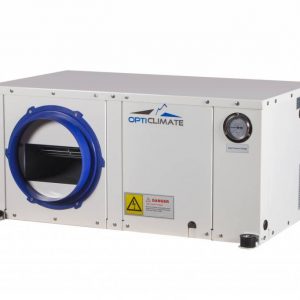
Climate Control
Climate Control
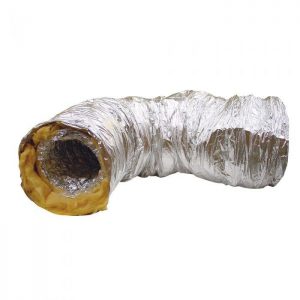
Ducting & Fittings
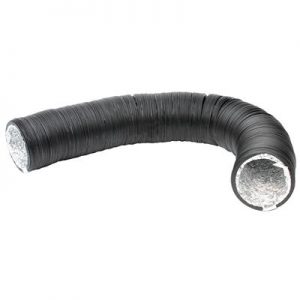
Ducting & Fittings
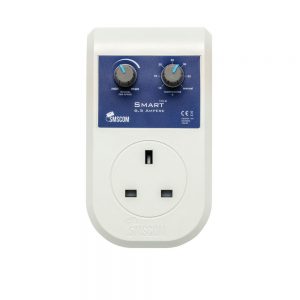
Fan Speed Controllers
Circulation Fans & Air Diffusers

Carbon Filters